



2018 School Spending Survey Report
Literary Lives | Performing Arts
Two new books feature the once married couple Miller and Monroe, including a biography of playwright and actor Arthur Miller and one that considers Marilyn Monroe’s life through the books on her shelves.
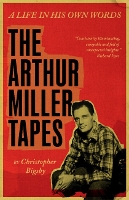 ★The Arthur Miller Tapes: A Life in His Own Words. ed. by Christopher Bigsby. Cambridge Univ. May 2026. ISBN 9781009636926. 384p. $29.95. THEATER
Bibsby (Four Contemporary American Playwrights) became friends with Arthur Miller (1915–2005) after writing to him as a grad student. He follows up his two-volume biography of Miller by weaving 30 years of taped conversations into a stream-of-consciousness new biography. Miller discusses his secular Jewish American New York City roots as the middle child of a wealthy, then Depression-impoverished, immigrant; his radicalism in support of the 1930s Spanish Republic and his attendance at some Communist-affiliated meetings; and his work for the Federal Theatre Project. Miller also discusses his involvement in anti-war activities, from Henry Wallace’s 1948 campaign through Eugene McCarthy’s 1968 campaign and beyond. He had three rather different marriages to Mary Slattery, Marilyn Monroe, and photographer Inge Morath. Miller discloses that he often draws on real people for character parts, supports Israel as a non-Zionist atheist, grew up in solidarity with Black people and laborers, and reflects on the differences between his goal in writing plays and their performance. VERDICT Besides abundant analyses of his extant works, researchers learn that many early plays were unpublished and may be in his archive at the University of Texas.—Frederick Augustyn
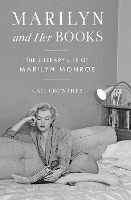 ★Crowther, Gail. Marilyn and Her Books: The Literary Life of Marilyn Monroe. Gallery. May 2026. ISBN 9781668098288. 320p. $30. BIOGRAPHY
Marilyn Monroe’s life and legacy have been analyzed at great length, yet the public remains captivated. Historian Crowther (Dorothy Parker in Hollywood) delves into a part of Monroe’s life not often examined: her bookshelves. The books, most of which were sold at auction in 1999, are the core of this literary take on Monroe. Many specific titles are discussed, and the full list from the Christie’s auction is used as backmatter for those wishing to see more. Diving into Marilyn’s bookshelves leads to a discussion about what a person’s literary choices reveal about their psyche. Even the lie that Marilyn couldn’t read is given latitude, along with other myths surrounding her intelligence. Her literary influences, her own influence on literature, and glimpses of her voice, told in notes she scribbled in the margins of her books, are all given space. VERDICT A perfect read for literature lovers and cinephiles alike, showing Monroe in perhaps her favorite light, as a girl curled up in a chair with an open book.—Jessica Durham


RECOMMENDED
TECHNOLOGY
ALREADY A SUBSCRIBER? LOG IN
We are currently offering this content for free. Sign up now to activate your personal profile, where you can save articles for future viewing
ALREADY A SUBSCRIBER? LOG IN
Thank you for visiting.
We’ve noticed you are using a private browser. To continue, please log in or create an account.
Add Comment :-
Comment Policy:
Comment should not be empty !!!