Related

Is the era of ephemeralization finally over or just beginning? LJ’s 2026 Periodicals Price Survey looks at how economic constraints may affect the landscape.

Brittani Sterling, Social Sciences and Interdisciplinary Studies Librarian at the University of Nevada–Las Vegas (UNLV), was named a 2025 Library Journal Mover & Shaker for her online workshops and UNLV Libraries program “We Need to Talk: Conversations on Racism for a More Resilient Las Vegas.” LJ spoke with Sterling about academic advocacy, talking about systemic racism in Las Vegas, and being in the public eye as an introvert-leaning ambivert.

AI is reshaping academic libraries but responsible adoption matters. Discover how embedded AI in Alma and Primo helps libraries support student research, improve workflows, and build confidence without disrupting trusted systems or professional judgment.

A curated collection of film-related titles to satisfy researchers in areas such as cinema and literary studies, as well as practitioners of filmmaking and screenwriting. This database is a solid start for institutions interested in expanding their selection of film-related resources, as it’s easy to use, with little to no learning curve for novices to the subject.

This outstanding resource offers opportunities to research and explore carefully curated primary sources that document the vibrant history of the visual arts in the United States. Informative, stimulating, and free to all, this archive is a delight.

ARL Unbound is a new column by Association of Research Libraries (ARL) Executive Director Andrew K. Pace, in which he talks with ARL members at the forefront of leading issues in research libraries. This month, Pace sits down with Alexia Hudson-Ward, university librarian and dean of Georgetown University Library, an elected member of the American Antiquarian Society, and the incoming president of the Association of College and Research Libraries.

The mission at the D.C. punk and indie fanzine collection at the University of Maryland–College Park’s Michelle Smith Performing Arts Library is to collect, preserve, and share self-published materials about the punk and indie music scene in the Washington, DC area from the 1970s through the present day.

Kayleen Jones, Education and Human Service Professions Librarian at the University of Minnesota–Duluth (UMD) Kathryn A. Martin Library, was named a 2025 Library Journal Mover & Shaker for her work launching the Antiracist Literary Advisory Board. Together with her library colleagues and the UMD Education faculty, Jones created the platform for Education students to learn about identifying needs around representation in children’s publishing and exploring ways to fill them. LJ spoke with Jones about the genesis of the project, and how it impacted those who participated.

As digital collections expand in both scale and complexity, the challenge of managing, showcasing and preserving these resources grows ever more urgent. The latest whitepaper from Clarivate, “Turning Hidden Gems into Strategic Assets,” explores how forward-thinking librarians are leveraging academic AI to enhance their digital special collections that drive research, teaching and institutional identity.

The Institute of Museum and Library Services (IMLS) announced February 20 that it has provided several Historically Black Colleges and Universities (HBCUs) with $1,725,261 in funding. The money was distributed among eight HBCUs and the HBCU Library Alliance toward projects that preserve U.S. history and develop the future workforce.

Bloomsbury’s London Symphony Orchestra Collections offer a stimulating selection of works performed by superb musicians and conductors. Close-up views and high-quality productions make this a highly recommended resource for students of music history and theory, ensemble management, and, especially, conducting.

In a world shaped by increasingly unstable political, environmental, and social pressures, this responsive, wide-ranging database could not be timelier. It is an essential resource for users seeking to gain a deeper understanding of the shifting contours of refugee communities and migration trends.

After I’ve finished a book, I’ll often check the reviews to see how my opinion lines up with what others have to say. Sometimes I’m surprised at points I’ve missed and amazed at what others have found (factual flubs, influences, allusions).

Open data has become “strongly embedded into research practices” and FAIR (findability, accessibility, interoperability, and reusability) data principles are now widely recognized, with awareness almost tripling from 15.2 percent in 2018 to 40.6 percent recently, according to “The State of Open Data 2025: A Decade of Progress and Challenges,” a report published in January by Digital Science, Springer Nature, and Figshare. The percentage of researchers who responded that they had “never heard of FAIR” has fallen from almost 60 percent in 2018 to 20.4 percent in the 2025 survey.

The purpose of any abstract is to summarise your article’s content in a way that will help potential readers decide if they want to read your work. An abstract usually runs between 150 and 300 words and will likely be your readers’ first interaction with your research article, so you must write it with that in mind.

What 171 academic libraries reveal about equity, funding and research support. In the U.S., R1 universities provide access to an average of 498 distinct databases — more than triple the number available at most Baccalaureate and Associate’s institutions.

LJ recently convened a roundtable of experts to weigh in on the latest developments in a topic that is central to the library profession: copyright.

Libraries are the guardians of cultural heritage, knowledge and community connection. Yet, in today’s digital era, much of their value remains hidden, trapped behind manual cataloguing, incomplete metadata and limited discovery tools.

We are pleased to have launched Oxford Law Pro, a new knowledge resource for legal professionals and researchers. Oxford Law Pro brings together more than 9,000 journal articles and over 600 award-winning, peer-reviewed books from our portfolio of authoritative and timely legal analysis, in key areas ranging from technology regulation to intellectual property law.

In today’s rapidly evolving academic landscape, libraries face the dual challenge of meeting diverse research needs while managing constrained budgets. The recent report from Clarivate, “Current trends in academic library holdings: The evolution towards aggregated content,” offers a timely and data-driven perspective on how libraries are responding to these pressures.

With its focus on new media sources and at-risk content, this dynamic collection honors the lived experiences and voices of Indigenous people worldwide. It is a vital, ever-changing resource for all libraries.

Mexico in History offers robust support for interdisciplinary research and curricula, though its sprawling scope means that most topics have limited coverage. This resource will be most impactful when integrated into undergraduate and graduate courses on Mexican history.

The NASA Goddard Information and Collaboration Center (GIC2) at the Goddard Space Flight Center (GSFC) in Greenbelt, MD, closed on Friday, January 2, by order of the Trump administration. In-person services and checkouts had ceased on December 9, 2025.

The mission of the Billy Ireland Cartoon Library & Museum at Ohio State University is to collect, preserve, and encourage the study of comics. It’s considered one of the largest collections of comics and cartoon materials in the world.

A rare collection of primary-source materials documenting China’s relations with the West during the transition from the Imperial to the Republican eras and covering topics such as trade, politics, and globalization. Institutions that already subscribe to Gale’s Imperial China and the West collection will find this to be a valuable companion.

Janet Hyunju Clarke, associate dean of research and learning at Stony Brook University (SBU) Libraries, NY, was named a 2025 Library Journal Mover & Shaker for her campus-wide collaborations to create needed support and social systems for Asian American and Pacific Islander (AAPI) students. LJ spoke with Clarke about how SBU’s AAPI Mentorship Network and AAPI Heritages Committee have evolved and grown.

The Joffrey Ballet was many people’s first introduction to the world of ballet and dance. After the company was founded in New York City by Robert Joffrey (1930–88) and Gerald Arpino (1923–2008) in 1956, it grew and performed in big cities and small towns across the United States and the world. Its archives are now housed in the New York Public Library for the Performing Arts’ Jerome Robbins Dance Division, which mounted an exhibition, “The Joffrey + Ballet in the U.S.,” in 2024–25. The exhibition is currently open at Chicago’s Wrightwood 659, an exhibition space, from October 3 through December 20.

According to a May 2025 survey, just under half of all responding adults said they think they see false or misleading information online every day. Amid the growing ecosystem of fake news and misinformation spreading online, library reference tools provide carefully vetted information that is trustworthy and reliable.

In October 2025, the Association of College & Research Libraries approved comprehensive AI competencies for library workers, recognizing that "library workers are increasingly called upon to help students and communities learn to evaluate and appropriately use AI tools." Text and data mining (TDM) offers a practical way to build these skills.


Inspiring awe and wonder, art, design, and architecture have underpinned creative endeavor since before recorded history. These works, suitable for consulting, ready reference, and circulating collections, highlight the wide range of materials on offer for readers looking to browse, conduct research, or even plan a trip.

The novelist Jane Austen’s 250th birthday is December 16, 2025. The Goucher College Library, a small liberal arts college library in Baltimore, is commemorating it with great enthusiasm. Thanks to the 1975 bequest of Goucher College alumna Alberta Hirshheimer Burke ’28, the library boasts one of the largest Austen collections in the country.

ALA Editions/ALA Neal-Schuman publishes wide-ranging titles for library and information professionals seeking resources on leadership, programs and services, professional development, library law, records and information management, copyright, censorship, and more. LJ spoke with publisher Angela Gwizdala to discuss the organization’s mission and audience, as well as her take on new and continuing industry trends.

EBSCO Information Services provides research databases, e-journal subscriptions, and technologies to universities, colleges, K–12 schools, public libraries, and others. LJ talked with Senior VP of Content Sara Earley to learn more about EBSCO’s resources, selection process, strategies, and organizational priorities.

Ken Soehner is the Arthur K. Watson Chief Librarian at the Metropolitan Museum of Art’s Thomas J. Watson Library in New York City. Whether overseeing the library’s expansive collections or teaching about specialized librarianship at Pratt Institute School of Information (where he is a visiting associate professor), he is focused on service to researchers. He talks with LJ about conducting art historical research, offers advice for library school students, ponders the challenges facing the field, and reflects on reference queries.

Support research and scholarship with these 60+ new and forthcoming databases and online products, spanning specialized topics and general reference. Click here for a PDF of all titles, organized by category.

Scheduled to be updated in late 2025/through 2026, consider these 60+ databases and online products. Arranged by category, these resources range from titles on the arts to those addressing travel and tourism.

Searching to update collections and fill information gaps? Consider these 500+ new and forthcoming print titles. Also included are new lists of reference fun reads.

The primary documents in this collection not only record a range of impressive sporting accomplishments but also provide a window into the culture, society, and politics of the 20th century. The resource reflects the global development and societal impacts of sports over the last hundred years, as well as the Olympic Games’ current impact on the contemporary landscape of sports management. With outstanding features, resourceful options, and inventive functions, this archive is a terrific resource for historians, sports enthusiasts, and researchers of 20th-century culture.

Can a U.S. journalist’s political affiliation influence the slant of their reporting even across different news outlets? Can global newspaper coverage help quantify uncertainty around climate-induced migration? Researchers are answering these questions by analyzing thousands or even millions of documents.
The data for new academic library buildings and renovations featured in LJ's Year in Architecture 2025.

Libraries have always been pillars of the community and trusted sources of knowledge and connection. But in a world overflowing with digital content and distractions, how do you ensure your valuable programs and collections get the attention they deserve? More and more libraries are turning to strategic library branding and merchandising to bolster their ongoing success and impact.

Artificial intelligence is reshaping higher education. According to the World Economic Forum's Future of Jobs Report 2025, AI literacy and data skills rank among the top workforce needs. Institutions are developing AI literacy frameworks, and faculty across disciplines are being asked to integrate AI tools and data analysis into their courses.

A growing number of libraries are exploring or implementing artificial intelligence (AI) in 2025 (67 percent, compared with 63 percent in 2024), although the majority are in the earliest evaluation stages, according to Clarivate’s second annual “Pulse of the Library” report, based on a global survey of 2,032 librarians from 109 countries representing academic, public, and national libraries. The report also notes that there is a wide variation between academic and public libraries with AI adoption.

This spring, the Kansas State University Libraries, in Manhattan, KS, will launch a Mobile Innovation Lab, in partnership with the Sunderland Foundation Innovation Lab. The towable trailer—packed with innovative technology and programming resources designed to inspire curiosity, spark innovation, and support digital equity—will deliver hands-on, STEM-focused learning experiences to middle and high school students across the state.

The mission of the Washington University in St. Louis Film & Media Archive is to preserve documentary film and media about the United States’ political and social movements, focusing on the Civil Rights movement and African American history.

The three of us talk monthly in the Libraries Lead podcast (available at librarieslead.libraryjournal.com), and share content from that segment of the podcast in digital and print form through Library Journal. In this month’s column we talk about: “Trapped in a ChatGPT Spiral,” Cloudflare CEO Matthew Prince on how AI could “ruin the internet,” disaster preparedness and using AI tools to recreate websites, Claude AI, and the recent Anthropic copyright settlement.

As AI becomes increasingly embedded in academic life, students and faculty are grappling with a rapidly evolving and often confusing landscape. From generative tools that summarize texts to chatbots that answer research questions, AI is transforming how learners interact with information.

Designed for libraries as an alternative to annual subscriptions—the costs of which may fluctuate over time—Perpetual Access models provide guaranteed, stable, and permanent access to digital resources for a one-time fee.

Gen AI is a fast-moving and transformative force across education. With AI now available to students for more than two years, data is emerging that sheds light on its impact on students and their research behaviors. ProQuest, part of Clarivate, is carefully gathering data, using the insights to evolve the resources that academic libraries make available to their users.

Librarians are no strangers to change. But today’s shift toward Academic AI assisted cataloging and personalized discovery isn’t just about technology. It’s about librarians shaping that technology to work for them and their user’s needs.

Library operations are increasingly shaped by the need to streamline processes, reduce manual interventions and foster collaboration across technical and non-technical staff. At the same time, innovation often changes how library professionals manage their tasks and Library Open Workflows (LibOW) from Ex Libris, part of Clarivate, opens up new possibilities for integrating these innovations.
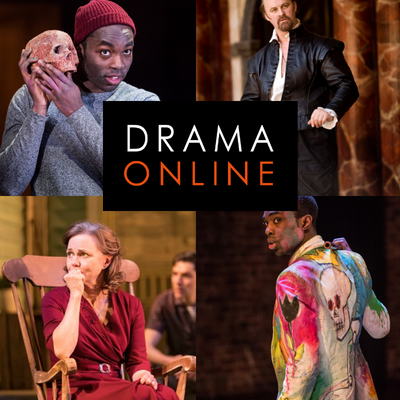
Exploring the same play through different performances helps us to deepen our understanding, challenges any assumptions about meaning, and demonstrates many possible interpretations. There are multiple filmed performances of individual Shakespeare plays here on Drama Online which can be used to support teaching and learning.

A dive in ProQuest Digital Collections shows how women’s labor has been documented and portrayed. What does women’s work look like through history?

This month, Bloomsbury Collections features volumes from The Revised Standard Edition of the Complete Psychological Works of Sigmund Freud, newly added to the platform. The long-awaited 24-volume set adds a new layer of revisions, translations, and explanatory annotations under the executive editorship of neuroscientist, psychoanalyst, and Freud scholar Mark Solms.

What do 17th-century satire, 19th-century pseudoscience and 20th-century bunnies have in common? Chocolate. But not just chocolate. Once-exotic commodities like chocolate, tea and coffee have reshaped economies, cultures and diets. Their stories appear in trade ledgers and recipes, medical journals and war memos, advertisements, ethnographies and literature.

Thanks to the growing catalogue of plays in translation published in recent years by Methuen Drama, English-speaking readers have access like never before to the riches of playwriting that lie beyond our linguistic borders.

Nearly all archival institutions, at every scale, hold a backlog of material awaiting processing. JSTOR’s recently created Digital Stewardship Services aims to address this situation with a next-gen service designed to help libraries and archives describe, preserve, manage, and share their collections using JSTOR’s AI-driven Seeklight tool (in conjunction with human expertise. Roger Schonfeld, who was recently named Managing Director of JSTOR Stewardship, spoke to LJ about bringing machine knowledge to a human-centered workflow.

Libraries have long been the guardians of knowledge, offering access to resources, facilitating research and connecting communities. However, in an age where information is expanding exponentially, many libraries face a growing challenge. With limited time, increasing resource volumes, and the need to maintain professional standards, librarians often find themselves caught in a web of manual cataloging tasks.

This month, Bloomsbury Collections features titles from Philosophy, specifically in Ethics and Moral Philosophy. Explore the titles to learn how different philosophers and schools of thought approach ethics and morality.

For decades, ProQuest has teamed with libraries, inviting learners and researchers to explore resources they can’t find on the open web. We’ve helped librarians stock their databases with primary sources that span centuries and range from government records and rare manuscripts to performance footage and oral histories.

Publishers, libraries, and faculty alike have realized their shared goals with the help of a new OA book publishing model from JSTOR, a mission-driven, nonprofit service of ITHAKA committed to making information more affordable and accessible for scholars everywhere.

Libraries have always been at the center of academic life, but their roles are expanding well beyond the boundaries of traditional resource management, committing to the wider academic mission. Libraries are aligning more closely with university goals and fostering new kinds of connections with students and faculty.

Costume and fashion design students will be delighted with the thoughtful range of content included in this unique and beautifully presented collection. This engaging resource is a must for any art, design, film, or theater program.

With intuitive search interfaces, this tool makes it easy to search multiple years of academic course catalogs. Across high schools, colleges, universities, and community colleges, students, administrators, counselors, and librarians will find great utility and multiple applications by investing in this affordable and useful resource.

The mission of the Black Women’s Organizing Archive (BWOA) is to gather the papers and ephemera of 19th- and 20th-century Black female activists and intellectuals. The digital and community-centered archive includes the papers of four extraordinary women—Anna Julia Cooper, Mary Ann Shadd Cary, Mary Church Terrell, and Frances Ellen Watkins Harper—from archives and repositories across the United States and Canada.

For more than a decade, the Open Science Framework (OSF), maintained by the nonprofit Center for Open Science (COS), has helped make scientific research more transparent in order to broaden its impact and raise quality and trustworthiness. OSF is a free, open platform supporting full collaboration among researchers.

Almost all scientific publications are published as PDF files. A major drawback of this format is that the formatting is fixed. Particularly, you cannot adjust the font size of the content. Hence, reading PDF files on smaller screens means that you constantly have to zoom in and out to read text.

Like the first series, the database functions as a gateway to other 20th-century public policy issues and is a snap to use, with stellar content and common-sense features.

An outstanding resource aimed at repatriating, protecting, and disseminating endangered African materials. This vital knowledge source is recommended for all institutions.

Libraries are once again at the forefront of change, continuously adapting to meet the shifting demands of their communities and institutions. From harnessing the power of emerging technologies to redefining the role of physical spaces, libraries are evolving into vibrant, multifunctional hubs of innovation, collaboration and learning.

Library Open Workflows is a new no-code solution from Ex Libris that empowers libraries to create customized, secure, and efficient workflows across their systems. Designed for accessibility and innovation, it simplifies complex integrations and enhances operational agility. General availability is expected in May 2025.

RIPM Jazz Periodicals captures a rich and fascinating slice of history and music culture. An excellent resource to support research on 20th-century U.S. history, Black history, entertainment, and music education. This singular primary-source collection is not easily matched.

This constantly growing collection pushes past traditional boundaries to preserve critically important endangered materials centered on LGBTQIA+ communities and history. It is a heartening, essential resource for all libraries.

Academic libraries are essential in supporting student success by expanding access to course materials, a goal often challenged by issues of cost, availability, and gaps in digital integration. Leganto, along with its AI-powered Syllabus Assistant, offers a scalable, efficient solution that transforms syllabus into a dynamic, accessible resource list, fostering deeper faculty collaboration and measurable institutional impact.

The mission of the California State Railroad Museum (CSRM) in Sacramento, CA, is to collect, preserve, and share the deep history of railroads and railroading in California and the rest of the western United States. The organization is also home to a large 19th-century reconstruction of a railroad station and railroad depot, with a still-functional train that gives tours to patrons.

In an era of shrinking library budgets, innovative consortial relationships are proving essential for maintaining equitable access to resources. Library leaders share how ILS-agnostic consortial borrowing, strategic partnerships beyond traditional resource sharing, and communicating value to stakeholders can multiply a library's impact despite financial constraints.
Until Janet Hyunju Clarke, Associate Dean of Research and Learning at Stony Brook University Libraries, got involved, the Asian American and Pacific Islander (AAPI) students who make up approximately 40 percent of the school’s population had never had a campus club that was open to anyone (as opposed to only students) or celebration related to their heritage. “We wanted to do something at a campus-wide level to show students that their history and experiences matter,” says Clarke.

As the archivist for San Diego’s Comic Arts Fest, Pamela Jackson curates 100,000 comics and ephemera. That alone would distinguish her, but bigger impact flows from her work at San Diego State University (SDSU). Along with SDSU history professor Elizabeth Pollard, Jackson developed a comics-based curriculum that has students more engaged than ever.

After graduating from library school, Alejandro Marquez served in the Peace Corps in El Salvador, and the experience still affects his work today. It “really helped broaden my horizons to seeing different cultures and how different people work,” he says, “being empathetic and thinking about the different people out there who need library services and the best way to connect with them.”

While viewed as the academic backbone of the two universities it serves, the Loyola Notre Dame Library “struggled like so many other libraries to bring patrons back into the building following the pandemic,” says Mallory Wareham. “We also faced the ever-present challenge of showing our patrons that libraries are far more than just a quiet study space.”

Mary Ton thinks there’s an ethical place for AI in the arts and humanities. She teaches researchers and students about the benefits and limitations of AI in research and the arts, drawing on her background in machine learning, and has presented on the topic across the state.

Describing himself as “aggressively helpful,” law librarian Kris Turner combines traditional legal research with the evolving generative AI world. “Generative AI technology worries many, creates skepticism in others, and is eagerly embraced by some,” Turner notes. “This wildly disparate level of welcome for GenAI means I especially need to show I am open to questions, challenges, and counterarguments.”
While working with the children’s literature collection at the University of Minnesota–Duluth—used by education students in their training—Kayleen Jones decided it needed to better represent the Duluth community and broader society. As she reviewed the collection to identify gaps, she was approached by education faculty interested in collaborating to provide hands-on experience for education students to learn about anti-racist practices.
Brittani Sterling had planned on going into social work, but when she realized she could help people through librarianship, she chose that path and never looked back.

By age 12, Billy Tringali was hooked on manga. “Reading something that came from all the way around the world was magical,” he says. “The stories were so different.” His hometown library in Kingston, MA, where he volunteered, had none, so he donated his collection. “It was incredible to see so many kids reading books that I put on the shelf,” he recalls.

As Outreach and Information Services Librarian for Cornell University Library and the Cornell Prison Education Program (CPEP), Maddie Reynolds navigates significant barriers to information provision. Her role, working at Auburn Correctional Facility, Cayuga Correctional Facility, and Five Points Correctional Facility, NY, was created by Cornell, as CPEP plans to begin offering bachelor’s degrees beginning in fall 2026.

Nicola Andrews and Sandy Littletree, both passionate advocates for Indigenous librarians and librarianship, are coauthors (with 2022 LJ Mover & Shaker Jesse Loyer) of “Information as a Relation: Defining Indigenous Information Literacy.” According to Littletree, the collaboration came from “this desire to talk about what Indigenous librarians are experiencing on the ground and the different practices and ways that Indigenous librarians, particularly in academia, have been drawing on their ways of knowing in their practice and teaching.”

Did you know that over 60%* of libraries are actively planning to integrate artificial intelligence (AI) into their services? A vital aspect of this change is understanding how AI can enhance library services. Advanced applications such as personalized recommendations for users or predictive models for space planning are already delivering impressive outcomes.

Ex Libris has introduced a redesigned user experience in Alma, focused on enhancing efficiency, accessibility, and usability. Developed in close collaboration with the library community, the update reflects a deep commitment to a user-centered design.
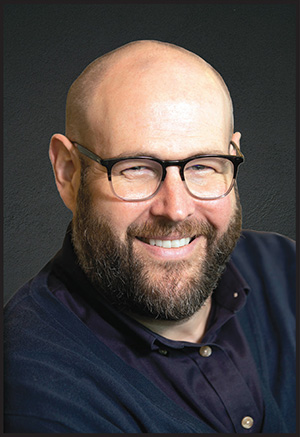
Matt Huculak was named a 2024 Library Journal Mover & Shaker for his work with researchers, artists, Holocaust survivors, and educators to help develop a graphic book about the Holocaust. We recently spoke with Huculak, who is now director of KULA: Library Futures Academy at the University of Victoria, about the vital importance and relevance of that work and how it came about.

Gale recently debuted new personalization and visualization features for its Digital Scholar Lab—a cloud-based research environment designed to facilitate the access and analysis of Gale primary source materials and a researcher’s local humanities and social sciences collections.

While those in favor of book bans believe children should be protected from content perceived as inappropriate or abusive, those opposed worry about the societal consequences of censoring information and ideas, the infringement of First Amendment rights, and the negative impacts on authors and publishers. Researchers Uttara M. Ananthakrishnan, Naveen Basavaraj, Sabari Rajan Karmegam, Ananya Sen, and Michael D. Smith set out to examine how bans at the district level affect consumption at the national level.
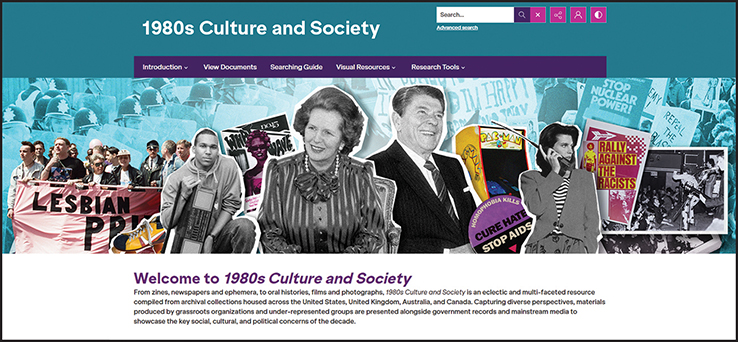
This AM resource provides a variety of information originating from an assortment of formats that will surely satisfy anyone interested in 1980s culture and society. Universities and colleges alike will want to consider adding this helpful targeted resource, as most people look back on the decade with both fondness and disappointment.
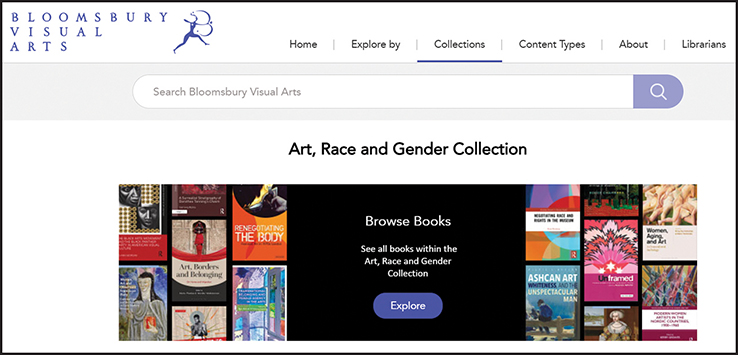
BVA’s Art, Race and Gender Collection provides access to a niche selection of monographs with an intersectional approach to art studies. A valuable resource for institutions supporting research and scholarship in the areas of art, art history, women’s and gender studies, and visual culture.

University presses publish valuable, peer-reviewed scholarly work and thought-provoking content that advances our understanding of the world. In today’s “post-truth” media environment, where reliable, well-researched sources exist alongside pseudoscience and political screeds, this type of authoritative information is more valuable than ever.

For more than 20 years, Gale’s Eighteenth Century Collections Online (ECCO)—the largest collection ever assembled of English-language books, pamphlets, and periodicals published in the 18th century—has served as an invaluable resource for students and scholars worldwide. Now, this resource is being further enhanced with 1.7 million new pages of content.

This year, we cast both a look back to see what can be learned from the past, and a look forward to consider what might be heading our way in the coming years.

As the needs of employers are constantly changing, job seekers and current professionals need upskilling resources that can keep pace with these rapid changes. With Gale Presents: Udemy, libraries can provide access to thousands of high-quality, on-demand online courses for in cutting-edge skills related to business, technology, leadership, and personal development.
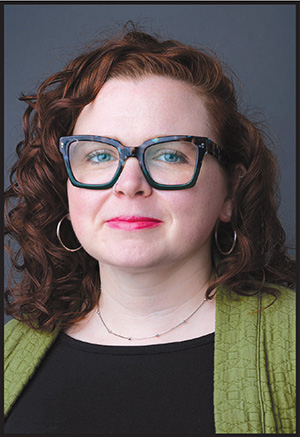
Allison Jennings-Roche was named a 2024 Library Journal Mover & Shaker for her work at the University of Maryland helping educate students, faculty, and librarians who work with information systems. LJ recently spoke with Jennings-Roche, who is now the associate director of digital initiatives and collections (and a PhD candidate) at the University of Baltimore’s RLB Library, about why it’s vital to understand information, where it comes from, and how it affects everyone.
ALREADY A SUBSCRIBER? LOG IN
We are currently offering this content for free. Sign up now to activate your personal profile, where you can save articles for future viewing
ALREADY A SUBSCRIBER? LOG IN
Thank you for visiting.
We’ve noticed you are using a private browser. To continue, please log in or create an account.
