Related

Beginning as a series of posts on the American Library Association (ALA) Connect members discussion board in fall 2024, Librarians We Have Lost was created to celebrate the Association’s sesquicentennial. ALA members were asked to submit tributes through ALA Connect to honor the memory, service, and professional contributions of librarians, educators, and library workers we have lost over the past 50 years.

Brittani Sterling, Social Sciences and Interdisciplinary Studies Librarian at the University of Nevada–Las Vegas (UNLV), was named a 2025 Library Journal Mover & Shaker for her online workshops and UNLV Libraries program “We Need to Talk: Conversations on Racism for a More Resilient Las Vegas.” LJ spoke with Sterling about academic advocacy, talking about systemic racism in Las Vegas, and being in the public eye as an introvert-leaning ambivert.

After refusing to comply with the library board’s decision to remove 132 books from the children’s section of the Rutherford County Library System (RCLS), TN, former Director Luanne James has been fired. The library board voted 8–3 to terminate James at a special board meeting on March 30.

Playaway has debuted the Launchpad Quest, a 21.5-inch touchscreen learning hub with up to 150 educational games, storybooks, activities, and more for children ages 3–10.
Can we, should we, focus on the core value of sustainability when so many of our professional core values are under attack? While some of our patrons are under attack? As we see the repeated attempts to dismantle the Institute of Museum and Library Services?

Staff members of the American Library Association (ALA) have announced plans to unionize with the American Federation of State, County and Municipal Employees Council 31 in Illinois. More than 40 employees of ALA, whose main headquarters is in Chicago, shared an open letter with their colleagues on March 2 encouraging their support for a new union, ALA Workers United.

In this month's AI Watch column, the Libraries Lead podcast team discusses whether AI could be making us work more, not less; ChatGPT's testing of ads; and how AI is being used in crime investigations.

Beanstack today announced its acquisition of Comics Plus. The two digital platforms will combine to create a Joyful Reading Company, a new brand combining Comics Plus' catalog with Beanstack's reading motivation tools.

Kayleen Jones, Education and Human Service Professions Librarian at the University of Minnesota–Duluth (UMD) Kathryn A. Martin Library, was named a 2025 Library Journal Mover & Shaker for her work launching the Antiracist Literary Advisory Board. Together with her library colleagues and the UMD Education faculty, Jones created the platform for Education students to learn about identifying needs around representation in children’s publishing and exploring ways to fill them. LJ spoke with Jones about the genesis of the project, and how it impacted those who participated.

In October 2025, a representative of the State Department informed 501(c)(3) nonprofit U.S. public libraries by email that they must stop offering passport application services as of February 13. Public libraries that are departments of local municipal governments were not included in the determination. The American Library Association (ALA) estimates some 1,400 libraries—15 percent of the nation’s total—could be affected.

Open data has become “strongly embedded into research practices” and FAIR (findability, accessibility, interoperability, and reusability) data principles are now widely recognized, with awareness almost tripling from 15.2 percent in 2018 to 40.6 percent recently, according to “The State of Open Data 2025: A Decade of Progress and Challenges,” a report published in January by Digital Science, Springer Nature, and Figshare. The percentage of researchers who responded that they had “never heard of FAIR” has fallen from almost 60 percent in 2018 to 20.4 percent in the 2025 survey.

Follett Content today announced the hire of more than 10 industry veterans—including several who previously held roles at Baker & Taylor—and several targeted investments in its technology infrastructure to strengthen its support for public library systems nationwide. Long a major supplier to K–12 schools and school libraries, Follett Content announced its entry into the public library market last September, as Baker & Taylor struggled to fulfill orders.

As artificial intelligence tools become pervasive, public libraries may want to establish transparent guidelines for how they are used by staff.

Over the past year, I’ve found myself replacing my favorite conversation starter—what are you reading?—with a new question: How are you using AI?

A three-year research project, funded through a grant from the Institute for Museum and Library Services, has been making progress on examining how libraries can help their communities better understand artificial intelligence. Led by a partnership between the Urban Libraries Council and the State University of New York at Albany’s Center for Technology in Government, four public libraries—Frisco Public Library, TX, Palo Alto City Library, CA, Queens Public Library, NY, and Schaumburg Township District Library, IL, are involved.

Voting for the American Library Association (ALA) 2027–28 presidential campaign opens March 9, and ALA members in good standing can cast their ballots through April 1. LJ invited candidates Tamika Barnes, Associate Dean for Perimeter Library Services at Georgia State University, Atlanta, and President of the Georgia Library Association; and Becky Calzada, District Library Coordinator for the Leander Independent School District, TX, and a cofounding member of Texas #FReadom Fighters, to discuss some key issues they see facing the association and librarianship.

LJ recently convened a roundtable of experts to weigh in on the latest developments in a topic that is central to the library profession: copyright.


As ICE raids continue in Minneapolis and St. Paul, MN (MSP), the school day is anything but normal. Parents are standing guard and acting as escorts for immigrants and all nonwhite students at drop-off and pickup, recess has often been moved inside while ICE agents stand just outside campuses, schools are facilitating online learning to accommodate children whose families are too scared to let them leave the house, and students are staging walkouts in protest.

Microsoft makes Windows and Office free for all public access computers in libraries, JSTOR reaches 100 open access books via its Path to Open initiative, Ingram partners with Backstage Library Works to bolster shelf-ready offerings, and more.

The NASA Goddard Information and Collaboration Center (GIC2) at the Goddard Space Flight Center (GSFC) in Greenbelt, MD, closed on Friday, January 2, by order of the Trump administration. In-person services and checkouts had ceased on December 9, 2025.


A prime piece of Miami real estate is at the center of contentious debates in south Florida. The 2.63 acre site in question is owned by Miami Dade College (MDC) and has a conservative financial worth estimated at $67 million, with commercial potential exceeding estimates of $300 million. In September 2025, the MDC Board voted quietly and unanimously to donate the prime piece of real estate to the state. That same day, Florida Attorney General James Uthmeier tweeted publicly that the land would be used as a presidential library.
This year marks Library Journal’s 150th anniversary. How many media companies can say they have been actively publishing for a century and a half? In an increasingly challenging media landscape, it feels almost miraculous to still be here.

Three letters sent by Tennessee Secretary of State Tre Hargett to the Stones River Regional Library System have set off a series of chain reactions, including library closures and a contentious Rutherford County Library System Board meeting that pitted the word of the library director against the board chair.

The Public Library Association (PLA) announced the launch of a Transformative Technology Task Force that will focus on artificial intelligence and “advise the association on the evolving role and impacts of transformative technology on library work.”

Despite the hopes of intellectual freedom advocates, on December 8, the U.S. Supreme Court declined to hear Leila Green Little et al. v. Llano County. The lawsuit, filed in April 2022 by patrons of Llano County Library System, TX, challenged the library’s removal of 17 books featuring content on sexuality, gender, and racism—as well as children’s “butt and fart books.”

Janet Hyunju Clarke, associate dean of research and learning at Stony Brook University (SBU) Libraries, NY, was named a 2025 Library Journal Mover & Shaker for her campus-wide collaborations to create needed support and social systems for Asian American and Pacific Islander (AAPI) students. LJ spoke with Clarke about how SBU’s AAPI Mentorship Network and AAPI Heritages Committee have evolved and grown.

In a summary judgment on November 21 in Rhode Island v. Trump, Judge John J. McConnell Jr. ruled that the Trump administration’s attempt to shut down the Institute of Museum and Library Services, along with other federal agencies, was illegal and unconstitutional.
UPDATE: In a statement released December 3, IMLS wrote: “Upon further review, the Institute of Museum and Library Services has reinstated all federal grants. This action supersedes any prior notices which may have been received related to grant termination. Grantees should access the agency's electronic grants management system for further information.”

The work for entrepreneurs and inventors to protect their products via patents and trademarks can be mind-bogglingly bureaucratic and difficult to understand. Tara Nash, librarian at Multnomah County Library in Portland, OR, was developing small business classes in 2021 and realized how strong the demand for assistance was.

Follett Content, a distributor of children’s and young adult (YA) print books, content, and services to PreK–12 school libraries, announced in September that it will begin distributing to public libraries throughout the United States. And Mackin, another major provider of fiction and nonfiction print books and digital resources to PreK–12 school libraries, announced in October the launch of MackinPublic, “a seamless extension” of the company’s services to U.S. public libraries, according to Mackin. Both moves were made as problems mounted for library book wholesaler, distributor, and service provider Baker & Taylor, culminating in an announcement on October 6 that the company would lay off more than 500 employees and fully cease operations in January 2026.

A growing number of libraries are exploring or implementing artificial intelligence (AI) in 2025 (67 percent, compared with 63 percent in 2024), although the majority are in the earliest evaluation stages, according to Clarivate’s second annual “Pulse of the Library” report, based on a global survey of 2,032 librarians from 109 countries representing academic, public, and national libraries. The report also notes that there is a wide variation between academic and public libraries with AI adoption.

The Arkansas State Library exists to administer state and federal funds for libraries and library development and to enhance access to libraries and information resources across the state. It disperses useful funding throughout the state’s libraries, large and small, and supports literacy and reading programs, as well as facilitating the state’s resource-sharing platform and administering the Library for the Blind and Print Disabled.

Baker & Taylor (B&T), the largest library wholesaler in the country, is shuttering. At a town hall on October 6, CEO Amandeep Kochar told staff that B&T would cease operations.

John J. Lennon is currently serving his 24th year of a 28-to-life sentence for murder, drug sales, and gun possession at Sing Sing Correctional Facility in Ossining, NY. He is also an accomplished journalist with a 15-year career whose work has appeared in the New York Review of Books, The New York Times Magazine, The Atlantic, Esquire, Rolling Stone, and New York magazine, and is a contributing editor at Esquire. He is also the author of The Tragedy of True Crime: Four Guilty Men and the Stories That Define Us (Celadon), which examines the problems with true crime as an exploitative entertainment genre through the stories of four men, including himself, who are serving time for murders committed in their youth. But how does an author launch a book tour, with the requisite library visits, from prison?

The three of us talk monthly in the Libraries Lead podcast (available at librarieslead.libraryjournal.com), and share content from that segment of the podcast in digital and print form through Library Journal. In this month’s column we talk about: “Trapped in a ChatGPT Spiral,” Cloudflare CEO Matthew Prince on how AI could “ruin the internet,” disaster preparedness and using AI tools to recreate websites, Claude AI, and the recent Anthropic copyright settlement.

As artificial intelligence aspires to reshape many aspects of daily life, including research and education, the same question is being asked: Will libraries survive? The answer is not only yes, but that libraries are more important than ever. Far from becoming obsolete, libraries are essential to guiding society and its citizens through this transformation, ensuring that AI is used ethically, equitably, and in ways that advance and preserve knowledge and social well-being.

Since January, the Trump administration and its Department of Government Efficiency (DOGE) have implemented widespread employee reductions. The Partnership for Public Service, a nonpartisan nonprofit with a mission to improve government, estimates that more than 199,000 civil servants have left the workforce as a result of the administration’s firings, forced relocations, and deferred resignation program. In looking at the numbers, it can be easy to lose sight of individual losses, but we shouldn’t.

Designed for libraries as an alternative to annual subscriptions—the costs of which may fluctuate over time—Perpetual Access models provide guaranteed, stable, and permanent access to digital resources for a one-time fee.

On Friday, September 26—the date that the deal had been scheduled to close—ReaderLink and Baker & Taylor announced that they had agreed to call off the proposed acquisition. According to ReaderLink, there has been no formal statement issued about the termination.

The American Library Association’s Freedom to Read Foundation has announced the five winners of the 2025 Judith F. Krug Memorial Fund Banned Books Week Programming Grants. The $1,000 grants help support public, academic, and special libraries; schools; and nonprofit organizations offering innovative and engaging programming for Banned Books Week, October 5–11.
The three of us talk monthly in the Libraries Lead podcast (available at librarieslead.libraryjournal.com), and share content from that segment of the podcast in digital and print form through Library Journal.

As the impact of generative artificial intelligence continues to grow, are there ways that libraries can help shape its future?

Over the past two years, Samuels Public Library, in Front Royal, VA, has been hit by a concerted book banning campaign that turned former county partners against the library. In March, the Warren County Board of Supervisors voted not to renew the Memorandum of Agreement with the library that would guarantee county funding through the end of the library’s fiscal year, on June 30. Without this critical funding stream—slightly over $1 million, a small percentage of the county’s budget but the majority of the library’s—the future of Samuels Library is now in jeopardy.

In a precedent-setting win for the freedom to read, on August 13 Judge Carlos E. Mendoza ruled that Florida House Bill 1069, which sought to ban “pornographic” material and books describing “sexual conduct” from school and classroom libraries, was overbroad and unconstitutional. Judge Mendoza ruled in favor of the plaintiffs on five of seven counts, calling for a revision to the statewide “Template Objection Form” prescribed for challenging school materials.

Amazon Business—the division of the online retailer that provides procurement services for businesses and institutions—this summer introduced a new online hub designed for libraries. The hub offers office supplies, IT equipment, furniture, facility maintenance products, and more, as well as a curated selection of print books available for individual purchase at discounts ranging from 30 to 40 percent.

The 17 goals of the United Nations 2030 Agenda for Sustainable Development were released in 2015, with the aim of addressing planetary ills such as poverty, violence, and human rights violations over the following 15 years. The simple but far-reaching items overlap, on a smaller scale, with library values—so much so that the American Library Association (ALA) created a Task Force on the United Nations 2030 Sustainable Development Goals in 2021. The task force’s mission is still going strong, and this year ALA sent a delegation to New York City during the UN’s High-Level Political Forum on Sustainable Development in mid-July.

The American Library Association (ALA) launched its 2025 Strategic Plan on July 18, after approval by ALA Council at the Annual Conference in Philadelphia in late June. The plan, created in partnership with planning consultants AMC and a task force made up of member volunteers from across the association, builds on the pillars of strengthening libraries, growing the library workforce, driving innovation, and expanding community impact.

Bots scraping data for artificial intelligence (AI) models have become a serious problem across the internet during the past several months, impacting libraries, cultural heritage websites, and other content important to these institutions.

Library vendors have made several announcements recently, including many during the recent American Library Association (ALA) conference in Philadelphia at the end of June.

Among all the encouraging dispatches coming out of this year’s American Library Association (ALA) Annual Conference, one of the most welcome was ALA’s announcement that Daniel J. Montgomery has been appointed as the association’s next Executive Director. He will start in the role on November 10, succeeding Interim Executive Director Leslie Burger.

It’s been four years since LJ spoke with Joy Bivins when she first stepped into her role as director of the Schomburg Center for Research in Black Culture, a research division of New York Public Library. During that time, Bivins has thoughtfully grown the collections and expanded programming, and this year’s Centennial exhibit and celebration have given her the chance to flex still further. LJ caught up with Bivins to hear her thoughts on collecting, the importance of archiving with an eye to the future, and what goes into celebrating 100 years of cultural heritage.
The Government Accountability Office (GAO) issued a report on Monday finding that the Trump administration broke the law when it withheld funding to the nation’s libraries via the IMLS.

In an upset to the temporary restraining order granted in American Library Association v. Sonderling, Judge Richard J. Leon has denied without prejudice the request for a preliminary injunction to block the Trump administration’s attempts to dismantle the Institute of Museum and Library Services (IMLS).

The Gwinnett County Public Library’s (GCPL) Learning Labs this spring hosted the library’s fourth annual Game Jam and GameDev Showcase, this year including 45 game developers and drawing more than 1,300 attendees who had an opportunity to meet the developers and try their games.

AI, natural language search, and integrated platforms are driving the latest advances in discovery at libraries.

The fifth annual U.S. Book Show, sponsored by Publishers Weekly, was held on June 3 at the New York Academy of Medicine. The daylong publishing industry conference drew nearly 800 in-person registrants and sponsors and covered a range of bases.
I played basketball from the time I was about nine years old until a knee injury sidelined me in high school. The game features in some of my happiest memories from growing up—from my dad coaching our undefeated rec league team to summer open gym sessions to laughing with my teammates at pre-game dinners and post-game bus rides. I enjoyed playing basketball, but what I really loved was being part of a team. I was reminded of teamwork as I began to prepare for the American Library Association (ALA) Annual Conference this year.

In a judgment that is likely to impact freedom to read challenges across the country, Judge Stuart Kyle Duncan of the Fifth Circuit Court of Appeals has ruled that library collection decisions are “government speech” and therefore not protected by the First Amendment. The 10–7 decision reversed the preliminary injunction issued in Little v. Llano County, a lawsuit filed in April 2022 by patrons of Llano County Library System, TX, over the removal of 17 books from one of the system’s three branches.

The sweeping preliminary injunction issued by Judge John G. McConnell in Rhode Island v. Trump marked a victory for the fight against President Trump’s executive order that sought to dismantle the Institute of Museum and Library Services (IMLS). The federal lawsuit, filed by 21 state attorneys general, challenged the March 14 executive order that put most of IMLS’s staff members on administrative leave and canceled or failed to fund grants and contracts. Under the preliminary injunction, issued by McConnell on May 13, the administration is ordered to return all IMLS staff to work and to reinstate some of the terminated grants, and “shall not take any further actions to eliminate IMLS” or the Federal Mediation and Conciliation Service and the Minority Business Development Agency, the two other agencies named in the suit.

A dispute over leadership at the Library of Congress has emerged in what appears to be a test over the separation of powers between the executive and legislative branches of government.

UPDATE: On May 13, Judge John J. McConnell Jr. issued a sweeping preliminary injunction blocking Trump administration officials from acting on the March 14 executive order to dismantle the Institute for Museum and Library Services (IMLS). Furthermore, the court ordered the administration to immediately takes steps to restore the agency’s employees and grant funding activities.

President Donald Trump has fired Librarian of Congress Dr. Carla Hayden. In a two-sentence email obtained by the Associated Press, sent on the evening of Thursday, May 8, Deputy Director of Presidential Personnel Trent Morse wrote, “Carla, on behalf of President Donald J. Trump, I am writing to inform you that your position as the Librarian of Congress is terminated effective immediately. Thank you for your service.”

When Library Director Natalie Draper started at the Northfield Public Library, she discovered ideas for supporting the community through public engagement sessions. “Something we heard in the engagement that we put into our strategic plan was people needing to feel that sense of belonging in a space,” she says. “A library services community best when the staff reflect the diversity of their community.”

After a $14.9 million bond library expansion referendum failed, Lisa Kropp knew she also needed a way to keep staff morale up. She proposed that the library take on the Sustainable Libraries Initiative certification program, an idea enthusiastically accepted by staff and the library board. Lindenhurst became the third U.S. library to earn the certification.

He calls himself an “accidental librarian,” but little of Shamichael Hallman’s work is done without intention. He began his career in ministry and found his way into libraries after discovering the fields had a great deal of overlap. While Senior Library Manager of Memphis Public Libraries’ Cossitt Library, he oversaw a significant building renovation that expanded his thinking about the opportunities public spaces provide in fostering civic engagement.
Brittani Sterling had planned on going into social work, but when she realized she could help people through librarianship, she chose that path and never looked back.

On March 26, the Special Libraries Association (SLA) announced its dissolution, following a unanimous vote by 2025 SLA Board members. The SLA Board is currently developing a plan for the dissolution process, which they anticipate should be complete by April 2026.

Gale recently debuted new personalization and visualization features for its Digital Scholar Lab—a cloud-based research environment designed to facilitate the access and analysis of Gale primary source materials and a researcher’s local humanities and social sciences collections.
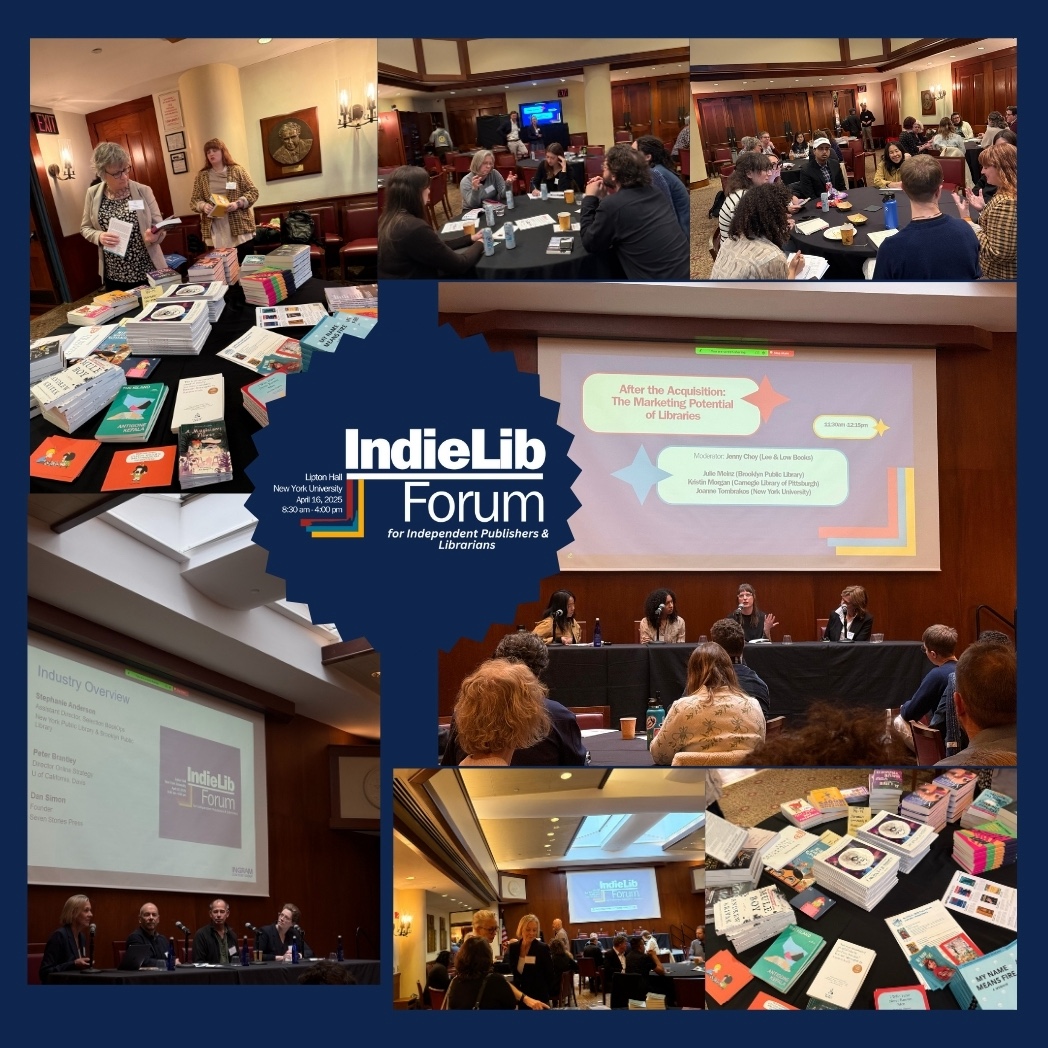
The second Independent Publisher and Librarian Forum—IndieLib for short—was held on April 16 in downtown Manhattan, at New York University’s Engelberg Center on Innovation Law and Policy. The event brought together public and academic librarians, representatives from indie publishers and their distributors, and others across the field to learn more about one another’s work and concerns and imagine new ways to move forward.

While those in favor of book bans believe children should be protected from content perceived as inappropriate or abusive, those opposed worry about the societal consequences of censoring information and ideas, the infringement of First Amendment rights, and the negative impacts on authors and publishers. Researchers Uttara M. Ananthakrishnan, Naveen Basavaraj, Sabari Rajan Karmegam, Ananya Sen, and Michael D. Smith set out to examine how bans at the district level affect consumption at the national level.

Three weeks after the fire was contained, Jessica Gleason, bookmobile librarian at the Wailuku Public Library, bookmobile driver Michael Tinker, and Lāhainā branch manager Chadde Holbron, hit the road to support Maui’s West Side community.

A new documentary, Banned Together—available to stream April 10—shines a spotlight on three young freedom to read advocates, and how, together and individually, they are standing up to make a difference.


Generative AI services use a lot of electricity and water, and create a lot of e-waste. The ecological impact of the technology is just beginning to be studied and discussed.

To help coordinate and support the work of saving government data, ensure that individual efforts didn’t duplicate one another, and provide a secure, accessible repository for archived material, a group of concerned librarians created the Data Rescue Project (DRP). A “clearinghouse” for data preservation efforts, DRP builds on efforts that began during Trump’s first term. LJ spoke with DRP organizer Lynda Kellam about the project and to learn more about how to get involved.

The vital role libraries play in their communities has been well documented, yet many libraries are overlooked, and certainly underfunded, for their significant involvement in disaster preparedness and recovery. Each new disaster brings focus to the urgency around recognizing libraries as key climate resiliency partners. To that end, academics, practitioners, educators, and other leaders have created a body of work to help share stories that raise awareness.

In our Climate Crisis series, rolling out over the next two weeks, LJ writers examine climate chaos from multiple perspectives and offer their thoughts on ways to address climate impact.
Capturing and preserving information has long been part of the library mission. As the world grapples with the wide range of threats climate change presents to the environment, ecosystems, and society, we can make a difference by keeping people informed.
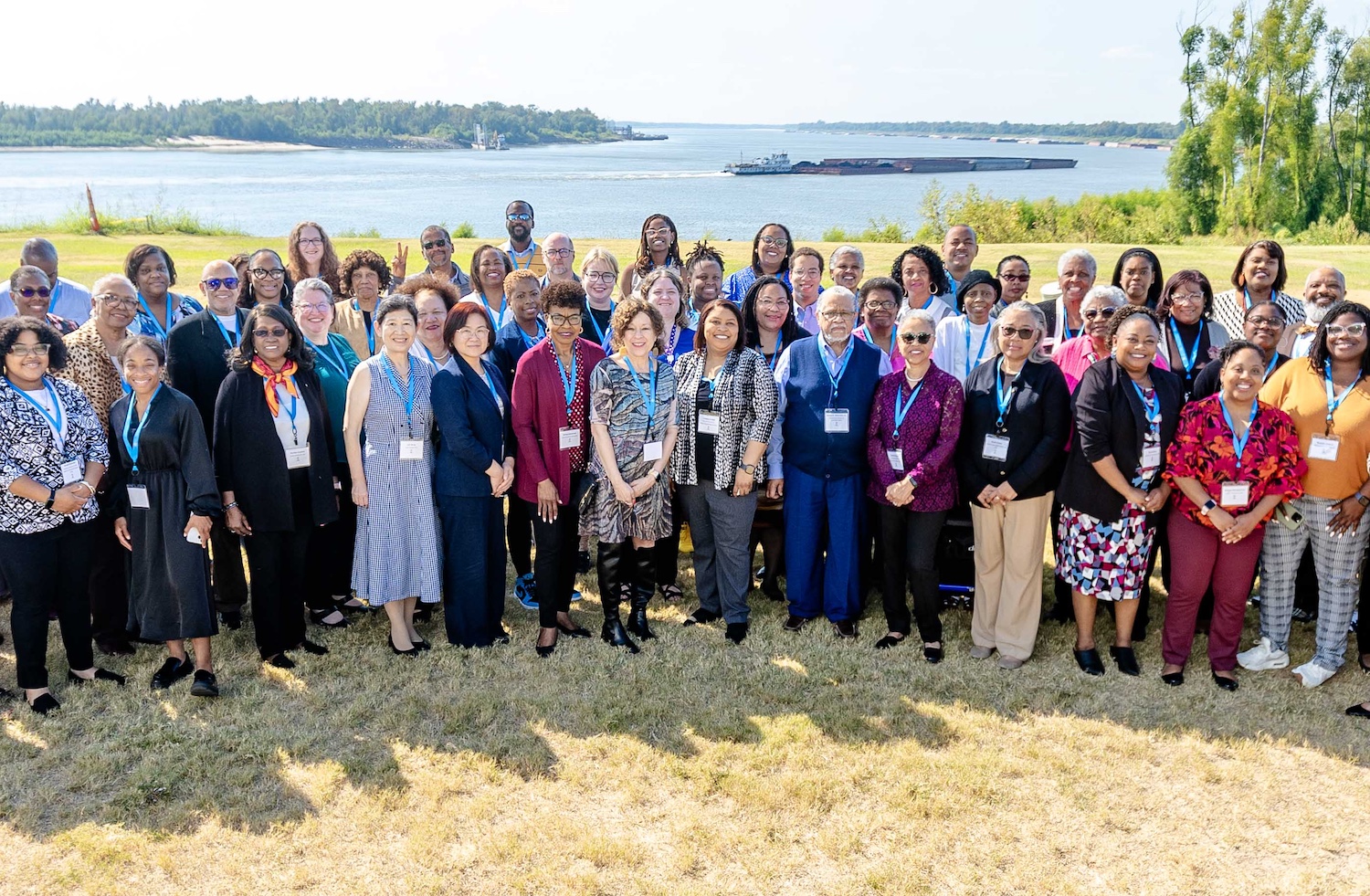
In January, the HBCU Library Alliance announced the award of a $1,000,000 grant from the John D. and Catherine T. MacArthur Foundation to support its multipart program “Empowering HBCU Libraries with Civil Rights Preservation, Digital Innovation, and Transformative Professional Development.”
The National Museum and Library Services Board, which serves in an advisory capacity to the director of the Institute of Museum and Library Services (IMLS), pens a letter to new Acting Director Keith Sonderling outlining which functions it considers essential obligations of the organization.

Alan Inouye has led advocacy and public policy for the American Library Association (ALA) since 2007, where he’s touched everything from E-Rate to copyright to ebook access, securing hundreds of millions of dollars in federal funding for libraries. His retirement from ALA this month marks a crucial moment for the association, which has weathered significant challenges in recent years and cannot afford to lose ground with relationships in Washington, DC, and across the broader library landscape.

Scott Summers, assistant director of the Media and Education Technology Resource Center (METRC) at North Carolina State University, was named a 2024 Library Journal Mover & Shaker for his work developing a program to help new teachers understand the growing problem of book censorship in school libraries, and how to work with librarians against it. We recently spoke with Summers about why he developed the program and what it teaches.

Some AI tools are making newsrooms more efficient; others are generating incorrect headlines and news summaries, presenting new information literacy challenges.
On Friday night, March 14, President Trump issued an Executive Order that called for the elimination of the Institute of Museum and Library Services (IMLS) and six other agencies. In FY24, the IMLS budget was $294.8 million, of which more than $211 million was dedicated to library services through the Library Services Technology Act (LSTA), the leading source of federal funding for America’s libraries. According to a statement from the American Library Association (ALA), “Libraries translate .003 percent of the federal budget into programs and services used by more than 1.2 billion people each year.”

On March 5, Clarivate issued an update to its February 18 announcement of a new subscription-based content access strategy for ebooks and digital collections, acknowledging the need for community consultation and a new transition timeline. Because customers expressed that “the original communicated dates for the last orders would pose a considerable challenge,” the open letter stated, Clarivate will extend the ability to make perpetual purchases of print and ebooks on all platforms—including Ebook Central, OASIS, Rialto, and GOBI—through June 30, 2026.
We cannot be caught flat-footed when library funding is called into question. Doing the work of capturing stories today will help ensure we’re prepared to deal with threats that we may face tomorrow.
Sara Ring, continuing education librarian at Minitex (a joint program of the Minnesota Office of Higher Education and the University of Minnesota), was named a 2024 Library Journal Mover & Shaker for her work helping develop 23 Linked Data Things and the Minitex Wikimedia Project. LJ recently spoke with Ring about what it took to build those projects and her plans for the future.

Jennie Pu, director of Hoboken Public Library (HPL), NJ, has announced her run for New Jersey’s 32nd Legislative District Assembly. Pu, who has led HPL since 2021, would be the first librarian to run for state office in New Jersey (joining librarians Kathy Zappitello, who ran for Ohio state representative in 2022, and Rebekah Cummings, who ran for Lieutenant Governor of Utah in 2024). If elected, Pu will be the first Chinese American lawmaker in the state’s history and the first Asian American woman to represent Hudson County.
Clarivate, the parent company of ProQuest and its Ebook Central platform, on February 18 announced the launch of a new subscription-based content access strategy for ebooks and digital collections. As part of the strategy, Clarivate will be phasing out the option for libraries to purchase one-time perpetual licenses for its ebooks and digital collections in 2025, including single-title purchases, upgrades, and evidence-based and demand-driven acquisitions.

Voting for the American Library Association (ALA) 2026–27 presidential campaign opens March 10, and ALA members in good standing can cast their ballots through April 2. LJ invited candidates Lindsay Cronk, dean of libraries at Tulane University, New Orleans; Andrea Jamison, assistant professor of school librarianship, Illinois State University; and Maria McCauley, director of libraries, Cambridge Public Library, MA, to weigh in on some key issues.

In July 2024, when Idaho’s House Bill 710 went into effect, libraries across the state felt its impact in large and small ways, from refining policies to removing contested titles from their shelves. The law, passed by the state legislature and signed by Gov. Brad Little, prohibits libraries and schools from allowing anyone under age 18 to access material containing “sexual content,” regardless of their age—the law makes no distinction between infants and 17-year-olds—or the books’ literary merit. In February a coalition of publishers, authors, parents, students, and the Donnelly Public Library (DPL) District filed a lawsuit challenging HB 710 on the grounds that it violates the First and 14th Amendment rights of librarians, educators, publishers, authors, parents, and students.
The American Library Association (ALA) has filed an amicus brief on the U.S. Supreme Court case, Federal Communications Commission, et al., Petitioners v. Consumers’ Research, et al., which stands to decide the fate of federal programs supporting broadband access for half of the nation’s public libraries. The brief affirms both the constitutionality and the value of the Universal Service Fund and the programs it administers—particularly the E-Rate program, which helps power broadband-enabled services and access in U.S. public libraries and schools.

In contrast to Meta CEO Mark Zuckerberg’s characterization of fact-checking as unwanted censorship, most Americans actually agree that the U.S. government and technology companies should each take steps to restrict false information and extremely violent content online.

Strong mutual support among community partners, and a conscious shift over the past decade to investigate what each of its neighborhoods needs most, and then step up to those needs, has earned St. Louis County Library the 2024–25 Jerry Kline Community Impact Prize.

Garland County Library, AR; North Bergen Free Public Library, NJ; and Queens Public Library, NY, demonstrate the resourceful programming, robust partnerships, and care for their communities that has earned them Honorable Mention for the 2024–25 Jerry Kline Community Impact Prize.
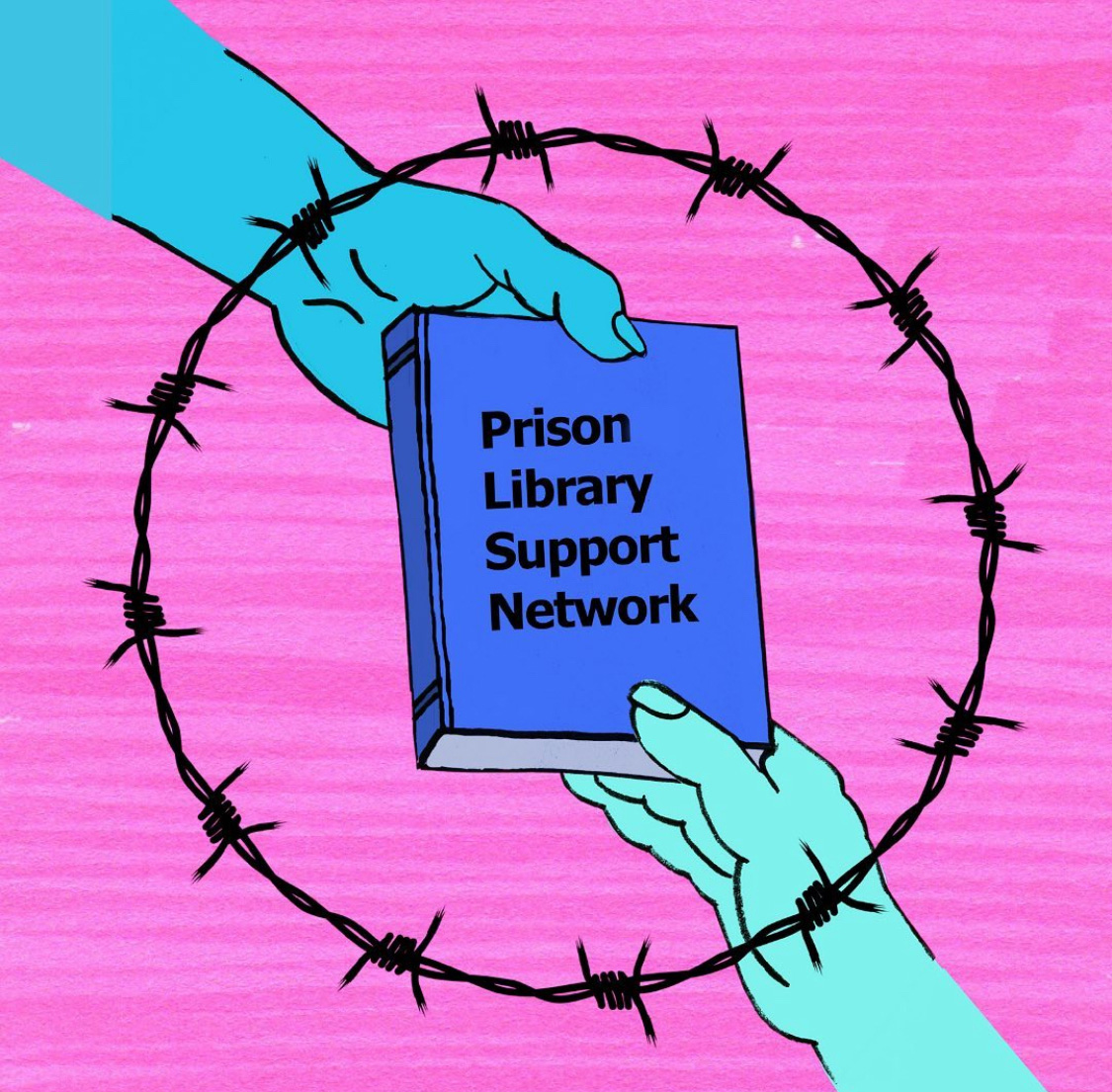
The Prison Library Support Network, established in 2015, works to meet the information needs of people who are incarcerated through a nationwide letter-writing project. Since the reference by mail program started in 2021, the New York City–based collective of librarians, graduate students, and activists has responded to nearly all of the 3,000 queries it has received from people in prisons across the United States, with the majority of letters coming from Texas, Pennsylvania, Illinois, Ohio, and Florida.
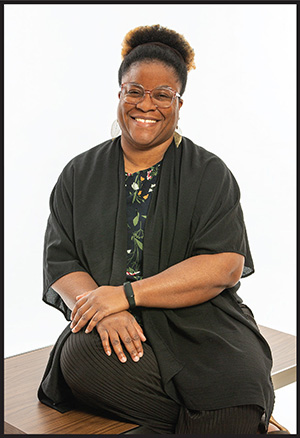
Nardia Cumberbatch, librarian at Florida’s Valencia College, was named a 2024 Library Journal Mover & Shaker for her work in helping the college achieve the Sustainable Library Certification Program, the second academic library in the country and the first library in Florida to have done so. We recently spoke with Cumberbatch about what it took to earn that certification and its resulting impact.
We have now passed the point of no return: We have not acted fast enough to slow the increasing frequency and severity of the impacts of the climate emergency in our lifetime. Even if we were to do everything “right,” climate scientists predict we have at least 30 more years of increasingly dire impacts from climate change. We now find ourselves facing this reality with an incoming administration that has already declared plans to roll back environmental protections that would have helped us do things “right” for future generations. So, what now?
ALREADY A SUBSCRIBER? LOG IN
We are currently offering this content for free. Sign up now to activate your personal profile, where you can save articles for future viewing
ALREADY A SUBSCRIBER? LOG IN
Thank you for visiting.
We’ve noticed you are using a private browser. To continue, please log in or create an account.
