Technology

In this month's AI Watch column, the Libraries Lead podcast team discusses whether AI could be making us work more, not less; ChatGPT's testing of ads; and how AI is being used in crime investigations.

Among the more than 100 pages of the Telecommunications Act of 1996, two paragraphs have had outsized influence on library services over the last 30 years. These paragraphs are the basis of the federal E-Rate program which, today, supports internet connectivity for about half of the nation’s public libraries.

Open data has become “strongly embedded into research practices” and FAIR (findability, accessibility, interoperability, and reusability) data principles are now widely recognized, with awareness almost tripling from 15.2 percent in 2018 to 40.6 percent recently, according to “The State of Open Data 2025: A Decade of Progress and Challenges,” a report published in January by Digital Science, Springer Nature, and Figshare. The percentage of researchers who responded that they had “never heard of FAIR” has fallen from almost 60 percent in 2018 to 20.4 percent in the 2025 survey.

A three-year research project, funded through a grant from the Institute for Museum and Library Services, has been making progress on examining how libraries can help their communities better understand artificial intelligence. Led by a partnership between the Urban Libraries Council and the State University of New York at Albany’s Center for Technology in Government, four public libraries—Frisco Public Library, TX, Palo Alto City Library, CA, Queens Public Library, NY, and Schaumburg Township District Library, IL, are involved.

The three of us talk monthly in the Libraries Lead podcast (available at librarieslead.libraryjournal.com), and share content from that segment of the podcast in digital and print form through Library Journal. In this month’s column we talk about: “Trapped in a ChatGPT Spiral,” Cloudflare CEO Matthew Prince on how AI could “ruin the internet,” disaster preparedness and using AI tools to recreate websites, Claude AI, and the recent Anthropic copyright settlement.

Allison Jennings-Roche was named a 2024 Library Journal Mover & Shaker for her work at the University of Maryland helping educate students, faculty, and librarians who work with information systems. LJ recently spoke with Jennings-Roche, who is now the associate director of digital initiatives and collections (and a PhD candidate) at the University of Baltimore’s RLB Library, about why it’s vital to understand information, where it comes from, and how it affects everyone.
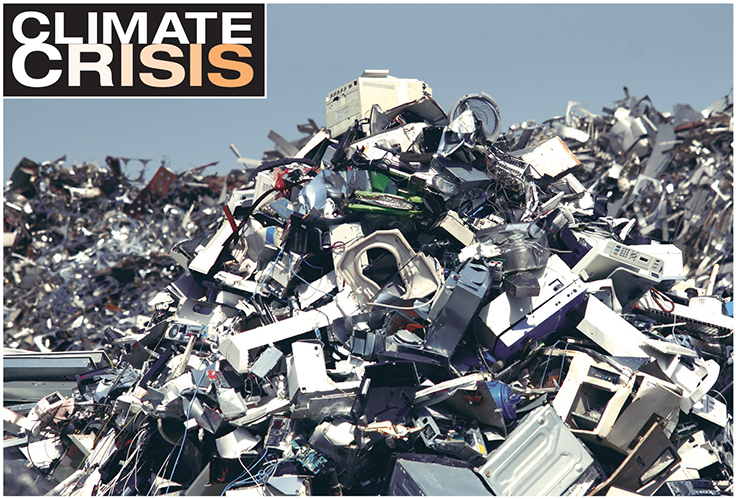
Generative AI services use a lot of electricity and water, and create a lot of e-waste. The ecological impact of the technology is just beginning to be studied and discussed.
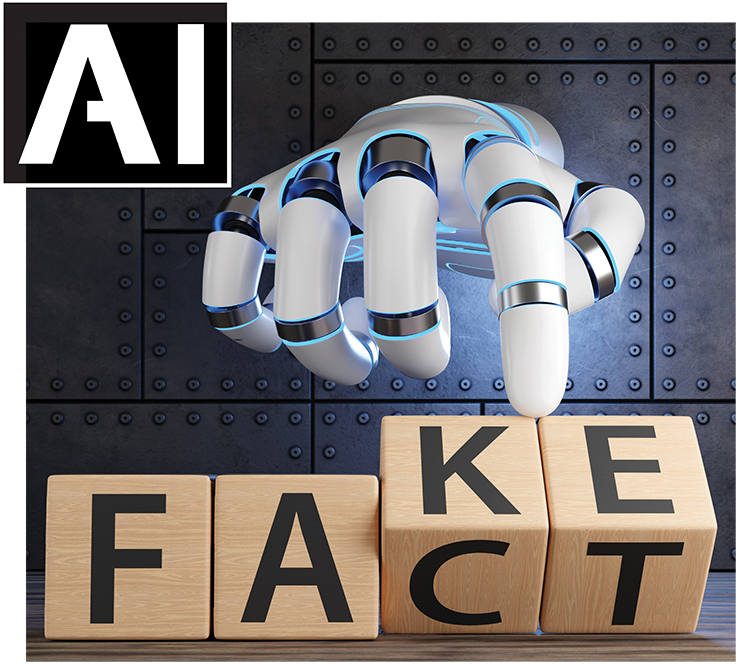
Some AI tools are making newsrooms more efficient; others are generating incorrect headlines and news summaries, presenting new information literacy challenges.

On March 5, Clarivate issued an update to its February 18 announcement of a new subscription-based content access strategy for ebooks and digital collections, acknowledging the need for community consultation and a new transition timeline. Because customers expressed that “the original communicated dates for the last orders would pose a considerable challenge,” the open letter stated, Clarivate will extend the ability to make perpetual purchases of print and ebooks on all platforms—including Ebook Central, OASIS, Rialto, and GOBI—through June 30, 2026.
ALREADY A SUBSCRIBER? LOG IN
We are currently offering this content for free. Sign up now to activate your personal profile, where you can save articles for future viewing
ALREADY A SUBSCRIBER? LOG IN
Thank you for visiting.
We’ve noticed you are using a private browser. To continue, please log in or create an account.
