


2018 School Spending Survey Report
ARL Unbound | Interview with Alexia Hudson-Ward
ARL Unbound is a new column by Association of Research Libraries (ARL) Executive Director Andrew K. Pace, in which he talks with ARL members at the forefront of leading issues in research libraries. This month, Pace sits down with Alexia Hudson-Ward, university librarian and dean of Georgetown University Library, an elected member of the American Antiquarian Society, and the incoming president of the Association of College and Research Libraries.
|
ARL Unbound is a new column by Association of Research Libraries (ARL) Executive Director Andrew K. Pace, in which he talks with ARL members at the forefront of leading issues in research libraries. |
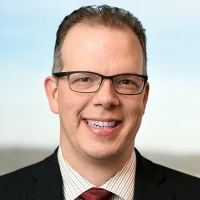 We’re living in a moment of revitalized interest in primary sources, provenance, and authenticity. As technology, including artificial intelligence (AI), makes it easier than ever to generate and disseminate convincing text, images, and video, people are increasingly seeking verifiable origins and firsthand evidence to separate what’s real from what’s merely plausible. Research libraries steward unique and distinctive items in their collections—including records of the institution and research materials of its faculty, as well as rare books and manuscripts—which advance research, instruction, and community engagement. To learn more about what’s top of mind for this area of librarianship, I didn’t have to look too far down the road from ARL’s headquarters in Washington, DC, to find a premier leader in distinctive and special collections.
I sat down with Alexia Hudson-Ward, university librarian and dean of Georgetown University Library, an elected member of the American Antiquarian Society (AAS), and the incoming president of the Association of College and Research Libraries (ACRL). In 2022, Dr. Hudson-Ward coedited Cultural Heritage and the Campus Community: Academic Libraries and Museums in Collaboration. Here are some highlights from our conversation.
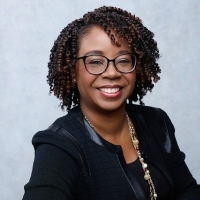 Andrew K. Pace: Tell us about your interest and experience with unique and distinctive collections in research libraries.
Alexia Hudson-Ward: It started during my undergraduate experience at Temple University. At the time, the university had two really amazing collections—the Charles L. Blockson Collection for African American History and also an incredible urban archive, all in the context of the broader urban community of Philadelphia.
Being able to work with those materials as an English literature and African American studies double major undergrad helped me to understand the power of special collections and the ways in which those collections can help shape our understanding around our collective history—as a human history, but also those very interesting narratives, regardless of how complicated they may be.
What kinds of trends are you observing?
I see the work transitioning. In addition to the history faculty being real champions and engaged and involved very intimately with special collections, we’re seeing transdisciplinary and cross-disciplinary interests in special collections. With the advent of AI, people are very interested in understanding the history of how people think about technology.
As someone who literally cowrote the book on library-museum collaboration, how can we understand the shared purpose and mission of libraries and museums? And how should we understand their differences?
There’s so much exciting work to do in this space. These communities think differently when it comes to execution. In academic libraries, we have a high level of autonomy with how we deploy resource access and distribution. Our patrons largely have immediate access to the resource and boom. In museums and galleries, some of their resource access processes require board approvals and collaboration with advisory committees and faculty. Museums are held to a different standard than academic libraries as many undergo independent accreditation processes. I believe there’s an opportunity for academic libraries to learn more from museums about strategic collaboration approaches. But also, our colleagues on the gallery and museum side could definitely benefit from our enthusiasm around immediate resource access for patrons, our philosophies about open access, and our ability to execute programming quickly. I think there’s a really rich and ripe opportunity to continue to explore those balances.
What are some of the opportunities and challenges we share across the GLAM (galleries, libraries, archives, and museums) sector?
How we think strategically and collaboratively about what we are doing to foster the next generation of professionals. We need to pass the baton as it was passed to us. I see that as a central part of my work as a dean, and I see that as a central part of my work as a leader within the profession, as an incoming ACRL president. How are we creating a leadership pipeline?
Georgetown has been engaged in a reconciliation with descendants of enslaved people. What role can university archives play in understanding the history of our institutions and rebuilding relationships?
Georgetown wanted to face its “hard history,” as my colleague Dr. Martha Jones at Johns Hopkins University would call it, and we helped pioneer addressing the slavery legacy of many elite institutions of higher education in the United States. Over 300 people were sold to ensure [Georgetown’s] financial viability. And from those individuals are more than 9,000 descendants, many with whom we still engage.
It is heavy, especially at this moment in time, to reflect on that history and how it has shaped the arc of the story of Georgetown and higher education in America. It takes, in my mind, a lot of courage for an institution to say, you know what, we’re gonna tackle and reconcile our hard history.
Institutions must be ready to engage in this important work by sustaining the infrastructure and commitment over a long period of time. To me, that speaks to the power of academic libraries as institutional infrastructure. We help our institutions reconcile our hard histories, confront our complicated narratives, and illuminate how and why we are who we are today.
Andrew K. Pace is the executive director of the Association of Research Libraries. Prior to joining ARL, he served as executive director of the University System of Maryland and Affiliated Institutions (USMAI) Library Consortium. Andrew is active in the American Library Association (ALA) and was elected to the National Information Standards Organization (NISO) Board of Directors in 2023.

Added To Cart
RELATED


RECOMMENDED
TECHNOLOGY
ALREADY A SUBSCRIBER? LOG IN
We are currently offering this content for free. Sign up now to activate your personal profile, where you can save articles for future viewing
ALREADY A SUBSCRIBER? LOG IN
Thank you for visiting.
We’ve noticed you are using a private browser. To continue, please log in or create an account.
Add Comment :-
Comment Policy:
Comment should not be empty !!!